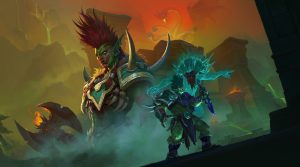
World of Warcraft’s Latest Patch: Strong Zone Design Meets Narrative DriftZul’Jan did nothing wrong. The newest chapter in World of Warcraft’s Worldsoul Saga delivers one of the more compelling open-world and raid environments the game has seen in years, while simultaneously exposing deep and recurring problems with its storytelling. The current patch centers on Zul’Aman and the return of Ula’tek, presenting players with a grounded, high-stakes troll-focused zone that deliberately restricts flying in key areas and evokes the dense, contested feel of classic Blackrock Mountain. Yet the narrative surrounding these systems feels curiously hollow—an interlude that advances almost nothing of consequence in the larger struggle against Xal’atath and the fate of Azeroth’s World Soul. A Zone That Remembers What Classic Warcraft Felt LikeCredit where it is due: the new zone and raid space are thoughtfully constructed. By limiting flight in the core raid approach and contested areas, Blizzard has recreated something closer to the high-traffic, high-conflict endgame hubs of vanilla and early expansions. Blackrock Mountain once concentrated Molten Core, Blackwing Lair, Blackrock Depths, and Upper Blackrock Spire into a single, chaotic vertical ecosystem where raid groups, dungeon parties, and PvP-minded players inevitably collided during peak hours. The current Zul’Aman-focused content captures a similar energy. Multiple difficulties, instanced world bosses with meaningful rewards, catch-up gear systems, invasions, incursions, and vault-style content keep the zone relevant long after the initial clear. Cosmetics and progression hooks give both veterans and returning players reasons to remain engaged. The environmental storytelling is also stronger than the dialogue. Zul’Aman itself carries genuine weight as a classic TBC raid location tied to the broader lore of the forest trolls, the high elves, the Sunwell, and the Eastern Kingdoms regions that featured heavily in Warcraft III. Seeing those older races and places treated with a degree of visual and spatial respect is refreshing. For players who value a more traditional, grounded Warcraft atmosphere—troll architecture, dense forests, ancient ruins, and the sense that this place has history—the zone succeeds. Narrative Stakes That Barely MoveThe problem is that almost none of this mechanical and environmental quality is matched by the story. The central questions linger unanswered and largely unasked: What did this raid tier actually accomplish in the larger war? Zul’Aman ends in a loose alignment with the elves, yet the alliance yields no significant new resources, artifacts, or powers that meaningfully alter the balance against Xal’atath. Ula’tek was originally summoned in ancient times to combat the Black Empire—an act that came at tremendous cost. The decision not to seriously leverage that power, or even to grapple with the implications of doing so, leaves the cosmic threat feeling strangely static. The World Soul of Azeroth and the broader Xal’atath arc remain essentially where they were before the patch. The result is the unmistakable sensation of a filler chapter dressed in attractive systems. This is especially disappointing because the setup had potential. A story about ancient troll power, ancestral debts, and the costs of summoning forces beyond mortal control could have deepened the Worldsoul Saga. Instead, the narrative opts for familiar, low-risk beats that do little to raise or complicate the stakes. Recurring Character Patterns and the Weight of TropesA consistent source of criticism centers on character handling, particularly the treatment of male troll leaders and other strong male figures. Over successive expansions, promising or established male characters—especially among the trolls—have been sidelined, vilified, or sacrificed in ways that clear the path for female counterparts. This pattern has now repeated enough times to feel less like organic tragedy and more like a default narrative setting. When honor, ancestral loyalty, resistance to external domination, and sincere religious or cultural identity are routinely framed as suspect or outdated while the characters embodying those values are diminished, the story begins to read as ideological rather than dramatic. These choices do not exist in isolation. They contribute to a broader sense that World of Warcraft’s writing has grown uncomfortable with the very themes that once defined its most memorable conflicts: the tension between tradition and progress, the cost of power, the legitimacy of cultural survival, and the tragic dignity of characters who refuse to yield their identity. When those ideas are flattened into obstacles for the “correct” characters to overcome, the result is drama that feels predetermined rather than earned. The final raid cinematic has drawn particular scorn for leaning into these tendencies with dialogue and framing that many players found clichéd and emotionally unconvincing. Character Design and the Forest Troll RedesignThe concerns about narrative direction are compounded by recent character model changes that many players find equally jarring. In the current patch, forest troll models—particularly the female variants—have been substantially revised. Female forest trolls are now frequently depicted with heavily masculinized, hyper-muscular physiques closer to bodybuilder proportions than to the more traditionally feminine silhouettes the race has used for most of World of Warcraft’s history. In the case of Zul’jan and his sister Zul’jara, the female character is shown as physically larger and more heavily muscled than her male counterpart. These are not subtle adjustments; they represent a clear and deliberate departure from prior art and model standards. What makes the change especially conspicuous is timing and priority. Troll models had already received relatively recent updates. Allocating further resources to push female forest trolls toward a markedly more masculine, physically dominant aesthetic—without any meaningful in-game explanation—has led many players to conclude that the decision was driven more by external cultural pressures than by storytelling or lore consistency. No narrative justification is offered for why female forest trolls have suddenly become several feet taller and extraordinarily muscular relative to established norms. In a franchise that has long differentiated its races through distinct sexual dimorphism and cultural visual language, such a radical revision stands out as an unexplained break rather than an organic evolution. Player reaction has been predictably divided, but a substantial portion of the audience has expressed fatigue and rejection. For these players, the redesign feels less like creative exploration and more like the imposition of contemporary gender ideology onto a long-established fantasy race. When combined with the recurring narrative pattern of diminishing or sacrificing male leaders in favor of female replacements, the visual changes reinforce the perception that World of Warcraft’s creative direction is increasingly shaped by activist priorities rather than internal consistency, player attachment to classic racial identities, or the grounded tone the new zone itself otherwise achieves. In a patch that succeeds at recapturing the spatial and systemic feel of older Warcraft, the decision to rewrite the physical language of one of its iconic races without explanation only deepens the sense of narrative and cultural drift. |