World of Warcraft: ForeverVideo: “I’ve Played WoW Forever for a Month Straight… I’m Obsessed” by Force Gaming (watch on YouTube). The beta impressions below are the creator’s own and are attributed as such. With more than 1,000 new quests, expanded zones, redesigned class specializations, improved professions and an account-wide progression system, World of Warcraft: Forever is attempting something more ambitious than a nostalgia-driven rerelease. Its real test will be whether it can preserve the social and exploratory character of original Azeroth while sustaining a living game for years to come. There is a particular feeling associated with returning to the original World of Warcraft: the slow approach to a distant settlement, the uncertainty of a forest you have not crossed before, the relief of finding another player when a quest proves more difficult than expected, and the satisfaction of reaching a destination that once seemed impossibly far away. For many players, these experiences were the substance of Azeroth. The equipment, levels and raids mattered, but they were embedded in a world that demanded time, attention and occasional cooperation. Progress meant more than watching a number increase. It meant becoming familiar with a place. Over the years, World of Warcraft has evolved in many directions. Modern WoW offers a far more streamlined approach to movement, combat, group formation and endgame progression. Classic restored an earlier version of the experience, but the return to an established ruleset also exposed a familiar limitation: a world preserved in amber can eventually become a solved problem. World of Warcraft: Forever is Blizzard’s attempt to address that limitation without abandoning the original game’s foundations. The project returns players to the original continents and the level-60 journey while adding new quests, locations, dungeons, class changes, crafting opportunities and systems intended to reward long-term participation. Blizzard has presented Forever as an ongoing experience rather than a one-off recreation. The question is not simply whether Blizzard has added enough content. More content is easy to advertise and relatively easy to count. The harder question is whether these additions reinforce the qualities that made the original game endure. A recent beta retrospective from Force Gaming offers a useful starting point. After spending more than 200 hours across multiple characters, the creator describes Forever as a version of Classic that has retained its essential identity while addressing several of its longstanding weaknesses. The enthusiasm is unmistakable, but the more interesting observations concern the relationship between exploration, class design, crafting, social interaction and persistent progression. Those systems form a coherent design argument. They also expose the challenges Blizzard must overcome if Forever is to become more than a successful launch followed by the familiar cycle of optimization, exhaustion and declining participation.
1. New Content That Expands the World Instead of Replacing It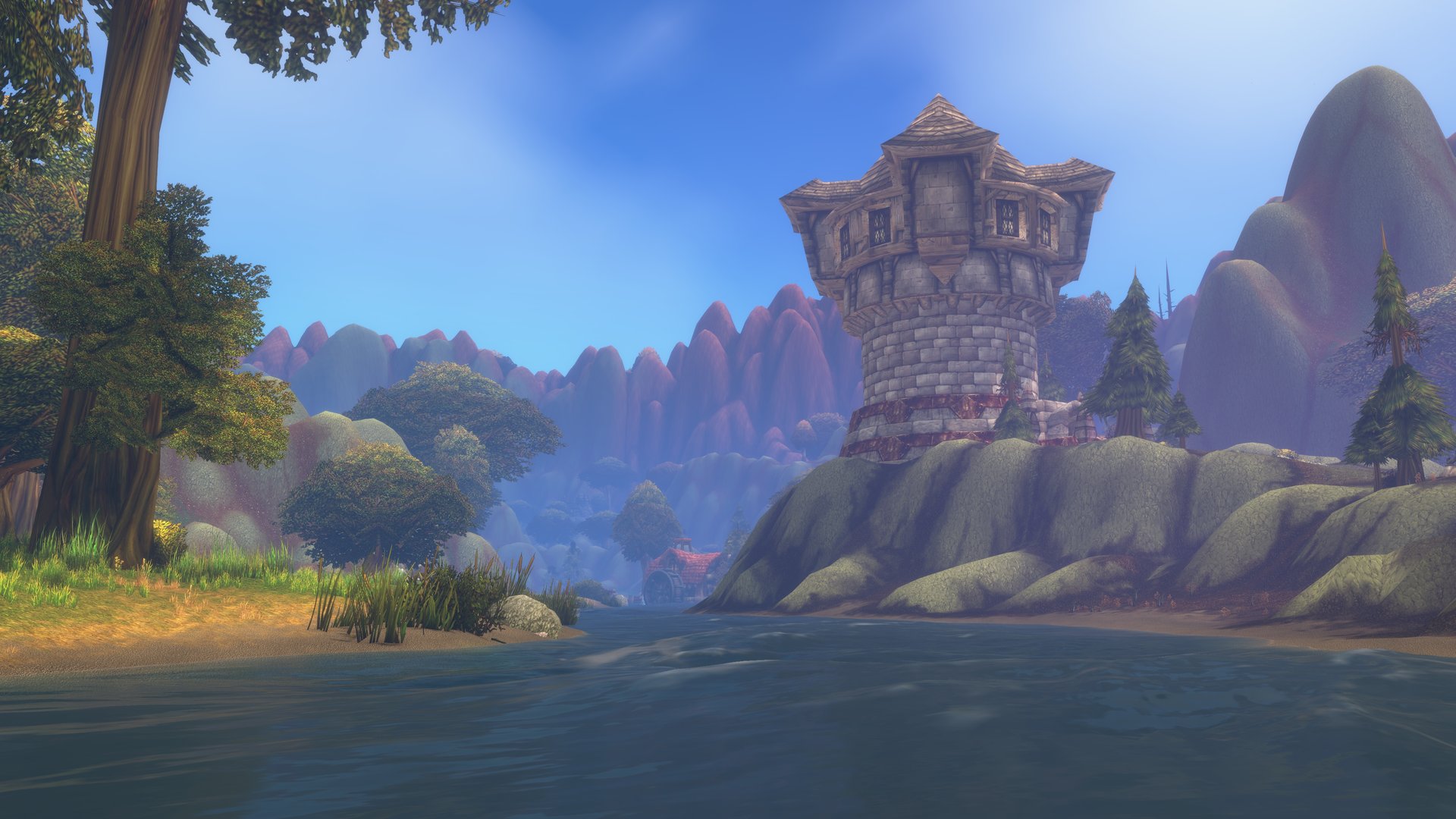 According to the game’s announced feature set, Forever includes more than 1,000 new quests, nine new dungeons, new zones, expanded existing areas and additional raid content. Blizzard’s official overview names the new regions as Mount Hyjal (reached through Darkwhisper Gorge), Shen’dralas between Mulgore and Desolace, the Riverglades frontier covering much of the mid-30s to mid-40s, and Zephras Isle, the starting area for the new Skyborne race. The nine dungeons include the Hall of Thanes beneath Ironforge, the Ruins of Lordaeron, an excavation site above Whelgar’s Excavation in the Wetlands, and the City of Dalaran. The beta retrospective describes new points of interest and quest chains distributed throughout the leveling experience, alongside larger additions that open up previously unexplored spaces. The distinction between expanding Azeroth and replacing it matters. The original continents remain the principal setting. Players are not being directed toward an entirely new world as the primary solution to the limitations of the old one. Instead, familiar geography becomes the foundation for further discovery. A road that previously connected two known locations might now lead past a new enemy camp. A familiar forest may contain another quest hub, an unexplored ruin or a dungeon entrance. Existing landscapes acquire additional layers without necessarily losing their original identities. Force Gaming describes exploring expanded sections of the Forsaken starting region, including new enemy camps, an abandoned settlement, a hidden tomb and additional questing areas associated with the new undead paladin option. These are observations from the beta, not a comprehensive independent audit of every zone. The design principle, however, is clear: familiarity should make discovery more meaningful, not render it unnecessary. The value of returning to familiar geographyOne of the less obvious strengths of this approach is that it preserves the value of existing player knowledge while giving that knowledge room to grow. A veteran may recognize a region’s layout, factions and visual language without knowing everything that now inhabits it. A returning player can draw on old memories but still encounter surprises. A newcomer has access to the same world without needing to understand its history before beginning. This is a more promising foundation for a persistent MMORPG than a constant succession of disconnected destinations. It also respects an important characteristic of the original game: the world was not merely a collection of backdrops for combat. Geography connected quests, factions, resources, travel and social encounters. Changing the world in place allows those relationships to remain relevant. The case for staying in AzerothClassic’s original continents possess a coherence that can be diluted when progression increasingly revolves around new expansion territories. New settings can be excellent, but each transition risks making earlier environments feel like completed chapters rather than places to revisit. Forever’s approach offers a different possibility. If the original continents continue to receive meaningful additions, players may have reasons to return to familiar regions without the experience becoming a repetitive exercise in nostalgia. That is a substantial ambition. It requires more than placing additional quest markers on an old map. New content must fit the geography, faction conflicts, progression curves and visual identity of the regions it inhabits. The beta’s expanded zones and quest chains are promising evidence of the approach. Whether the full release maintains that standard across levels 1–60 remains a question for sustained play. 2. Exploration Needs Atmosphere, Not Just More Objectives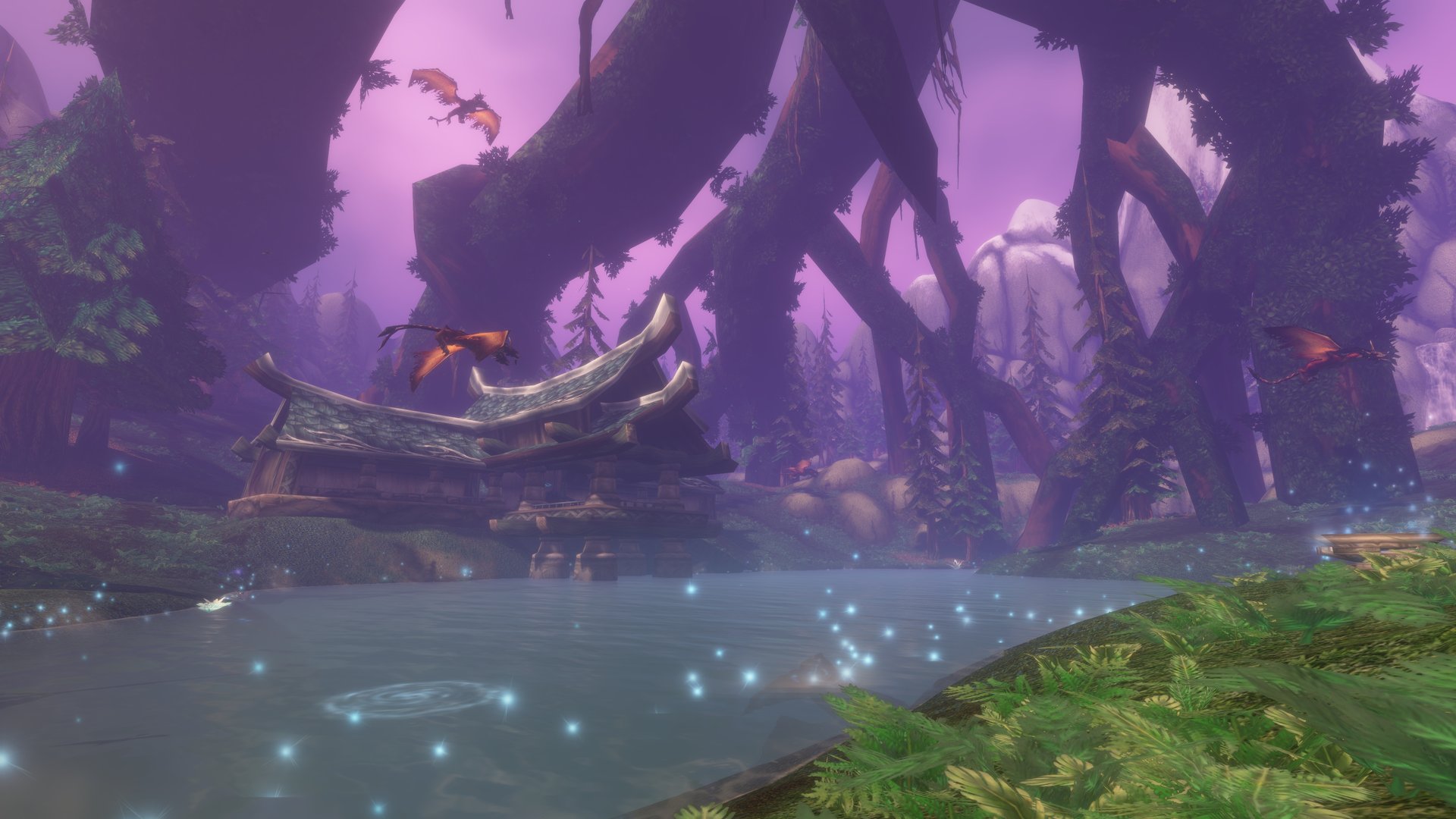 Content establishes what a player can do. Atmosphere determines how the world feels while doing it. The beta retrospective singles out lighting, volumetric fog, water, weather and increased environmental visibility as some of Forever’s strongest improvements. The point is not that the game has abandoned its original art direction for a modern rendering showcase. Rather, it appears to be using updated presentation to reinforce the identity of the existing world. That distinction is important. World of Warcraft‘s original visual design was never an attempt at photorealism. Its environments relied on distinctive color palettes, exaggerated silhouettes, readable terrain and strong contrasts between regions. Elwynn Forest, Duskwood, the Barrens and the wetlands could be distinguished by their visual character as well as their geography. Improved lighting and atmospheric effects can strengthen those differences without requiring a wholesale visual redesign. A shaft of light through a canopy, mist across a body of water or a distant mountain visible above the horizon can make familiar terrain feel less like a route through a questing interface and more like a place. The return of scaleThe beta retrospective also highlights increased render distance and the ability to see landmarks across much greater distances. This matters because visual distance can change the perceived scale of an environment. A mountain glimpsed from a neighboring region creates a destination before the player has reached it. A distant landmark establishes a relationship between places that might otherwise feel like separate questing zones. The original continents already benefit from seamless travel between many adjacent areas. Greater visibility can make that continuity more apparent. There is a useful comparison here with Valheim, where weather, lighting and distant terrain often contribute as much to the experience of exploration as the immediate objective. The comparison is about atmosphere rather than equivalent technology or identical design. Forever appears to be pursuing a similar principle: the environment should reward looking around, not just following the next marker. Yet presentation has limits. Better fog, lighting and visibility cannot compensate for repetitive quests, empty landscapes or progression that pushes players through regions too quickly to appreciate them. Visual improvements are most effective when the underlying game gives players a reason to inhabit the spaces they reveal. Forever’s success will depend on whether its new content and its environmental improvements reinforce each other. 3. Class Identity: Viability Without Homogenization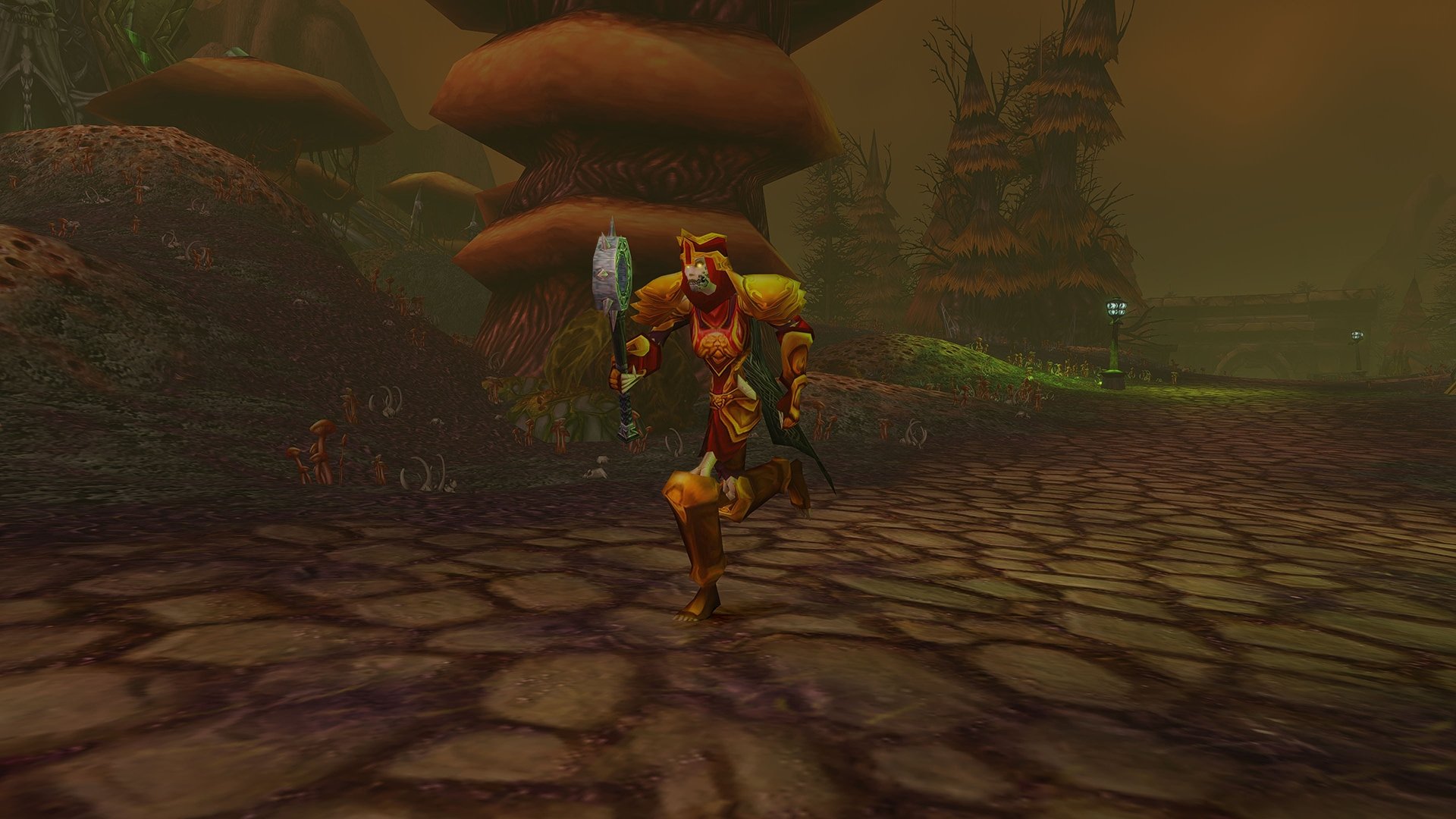 Class design may be the most consequential gameplay question in Forever. Original WoW’s classes were not interchangeable collections of damage rotations. They offered distinct strengths, weaknesses, tools and responsibilities. Warriors depended on different forms of support from other classes. Priests, druids and paladins approached healing differently. Rogues controlled encounters through stealth and disruption. Hunters combined ranged combat with pets and considerable independence. That asymmetry could be frustrating. Some specializations were significantly less attractive than others for particular forms of content, and players sometimes found that their preferred fantasy came with substantial mechanical disadvantages. Forever’s class changes attempt to address that problem without making every specialization equally effective at everything. The beta retrospective describes a broad effort to make more specializations useful across portions of the game, including solo play, dungeons, raids, farming and PvP. The intention is not universal parity in every encounter. It is a wider range of meaningful choices. That is the right problem to solve. A specialization should offer a different way to playConsider the difference between making a specialization viable and making it interchangeable. A viable specialization has a credible purpose. It may be particularly effective in a dungeon, strong in a duel, useful for farming or valuable to a raid because of its damage profile or utility. An interchangeable specialization performs essentially the same function as every other option, with its differences reduced to cosmetic effects or minor numerical variations. The first approach supports class identity. The second risks eroding it. The beta’s reported changes appear to favor the former. Paladins retain their distinctive combination of armor, healing and utility. Shamans retain their elemental magic, totems and melee potential. Druids offer unusual versatility. Rogues preserve the advantages of stealth and choosing when to engage. Warriors retain a recognizable relationship with heavy weapons, sustained damage and traditional tanking. These are illustrative class identities, not guarantees that every specialization will be competitive in every situation at launch. The important question is whether the redesigned talent trees and abilities give players more reasons to experiment without eliminating the meaningful trade-offs between classes. The danger of solving the game too earlyBalance is not simply a matter of ensuring that every class produces similar numbers. It also determines how players organize themselves. If one specialization becomes mandatory for every serious group, its nominal viability may not translate into genuine choice. If a particular build dominates every form of content, the theoretical diversity of the talent system becomes irrelevant. The reverse problem is equally serious. If a specialization is consistently excluded from raids or PvP because it contributes too little, class fantasy becomes a burden rather than an advantage. Forever will need ongoing balance work, transparent design goals and a willingness to revise systems when actual player behavior exposes weaknesses that testing did not reveal. The beta’s enthusiasm around multiple classes is encouraging, but it is not proof of long-term balance. Leveling performance, dungeon utility and endgame raid effectiveness are different questions. Some builds will only reveal their strengths or weaknesses when players have access to level-60 equipment and complete encounter data. For now, the most promising aspect is the stated direction: broaden the range of useful specializations while preserving the reasons players choose different classes in the first place. 4. Community Is a Game System, Not a Marketing SloganThe social dimension of the beta retrospective deserves particular attention. Force Gaming describes a period of active cooperation, with players exchanging information, answering questions and learning unfamiliar systems together. New quests, gear, recipes and dungeons create uncertainty, and uncertainty creates opportunities for players to help one another. This is a temporary advantage of any new game environment. Once strategies become widely understood, the questions that brought strangers together begin to disappear. Forever’s developers cannot indefinitely rely on novelty to produce cooperation. They need systems and content that preserve the value of interacting with other people after the initial discoveries have been documented. Several reported features point in that direction. A world that remains populatedThe beta’s server and layering arrangements appear designed to keep players together rather than leave large areas deserted during quieter periods. This addresses a familiar MMORPG problem. A world may be geographically enormous, but if its population is fragmented across too many separate instances or diminished by time-zone differences, it can feel empty. A populated world creates opportunities for spontaneous grouping, competition over resources, unexpected PvP encounters and the simple recognition that other people are pursuing their own goals nearby. There is a trade-off, however. The same beta account describes players disappearing when crossing between layers and confusing transitions during PvP skirmishes. The system can help preserve population density while also producing moments that disrupt continuity. The objective should not be maximum density at any cost. It should be a coherent world in which players can find one another, understand their surroundings and predict how encounters will unfold. Layering is therefore an important area to monitor after launch. Population management must support the illusion of a shared world rather than expose the machinery that keeps it populated. Remembering the people encountered along the wayThe beta retrospective also describes a recent-players feature that makes players with whom you have previously interacted more recognizable and provides a record of earlier encounters. This is a small but potentially meaningful intervention. Traditional MMO social systems often assume that players will remember names, maintain their own lists or join a guild to preserve relationships. Those tools remain valuable, but they do not always capture the fleeting interactions that make a world feel populated by individuals rather than anonymous characters. A system that helps players recognize people they have grouped with, fought against or otherwise encountered can reduce the distance between a spontaneous meeting and a recurring relationship. It cannot manufacture friendship. It can, however, make it easier to recognize the beginnings of one. The campfire and the value of doing lessThe campfire system receives a similarly positive mention in the retrospective, particularly as an opportunity for players to pause and interact during their adventures. The significance of such a feature is easy to underestimate in a genre increasingly concerned with activity density. An MMORPG does not need every moment to be optimized for rewards. Rest stops, travel, downtime and incidental conversation can help create the sense that players are inhabiting a world together. These moments are difficult to quantify. They are also difficult to reproduce through matchmaking alone. The social experience of an MMORPG emerges from the interaction of its systems: how far players travel, how difficult an encounter becomes, whether someone needs assistance, whether a resource is contested and whether a shared activity creates an opportunity to meet again. Forever’s strongest community features may ultimately be those that make cooperation natural without turning every social interaction into a mandatory checklist. 5. PvP and the Productive Role of Conflict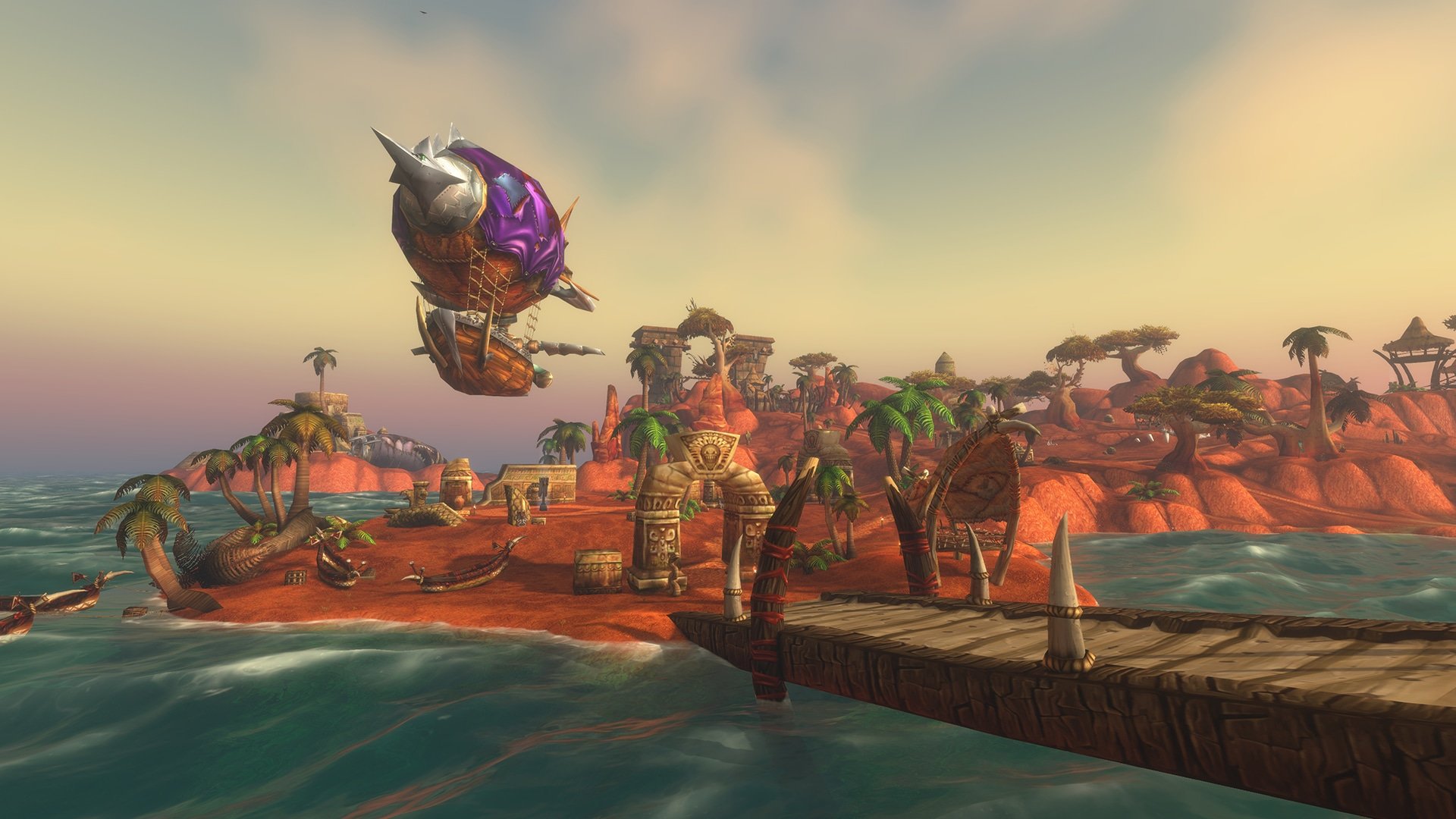 The beta retrospective also reports a generally positive experience on a PvP ruleset, with open-world encounters producing tension without making ordinary questing consistently impossible. That balance is important because open-world PvP can serve two very different purposes. At its best, it introduces uncertainty into familiar activities. A dangerous journey becomes a story. A contested resource becomes a negotiation between cooperation and conflict. A chance encounter with a rival creates an experience that neither player necessarily planned. At its worst, the same system allows stronger or more numerous players to repeatedly prevent others from participating in the game. The difference is not simply whether players can attack one another. It is whether the resulting conflict leaves room for meaningful participation. Classic’s class asymmetry contributes to this dynamic. A rogue’s ability to choose an engagement, a hunter’s ranged tools or a warrior’s dependence on support can make encounters feel different rather than reducible to identical combat templates. But the system must also account for population, faction balance, level differences and the practical ability to disengage. The beta’s positive experiences are evidence of potential, not proof that griefing will remain manageable once the population grows and competitive incentives intensify. Blizzard should monitor whether players can continue questing, gathering and traveling while accepting that danger is part of the ruleset. PvP should create stories, not make ordinary participation contingent on the goodwill of whichever group happens to control a zone. 6. Professions That Matter Before Level 60Crafting is another area where Forever appears to be addressing a longstanding weakness of the original game. In Classic, professions can be valuable, but the usefulness of crafted equipment during leveling is uneven. Players may spend resources and time developing a trade skill only to discover that much of its output is inferior to quest rewards, dungeon drops or equipment acquired elsewhere. The beta retrospective describes a more substantial role for crafted gear throughout the leveling process, including improved trainer recipes and a system in which players exchange profession-related resources for currency used to obtain additional recipes. The aim is straightforward: crafting should contribute to character development before the endgame, rather than function primarily as an investment in future utility. This has implications beyond the professions themselves. When crafting produces useful equipment at relevant levels, gathering becomes more valuable. Gathering creates reasons to explore. Recipes create demand for materials. Material demand encourages trade and cooperation. Profession choices become part of the character’s identity rather than a secondary menu that players ignore until reaching the level cap. These effects are not automatic. An economy can still become distorted by excessive supply, trivialized recipes, automated farming or equipment that makes dungeon rewards irrelevant. The balance lies in giving crafted items a meaningful place within progression without allowing professions to invalidate every other source of equipment. The importance of a working economyA healthy MMORPG economy is not simply one in which players can sell large quantities of items. It is one in which different activities generate useful goods, players have reasons to exchange them, and progression creates demand without making ordinary participation prohibitively expensive. Forever’s profession changes should therefore be judged by more than the number of new recipes. The relevant questions include whether recipes remain useful for long enough to justify their cost, whether gathering materials have a meaningful market, whether different professions retain distinct advantages and whether players who specialize in production can contribute to the wider community. If the new systems deliver on their stated goals, crafting could become a more consistent part of the journey from level 1 to 60. That would be a meaningful improvement to the original design rather than a superficial addition. 7. The Legacy System: Progress Beyond the Main Character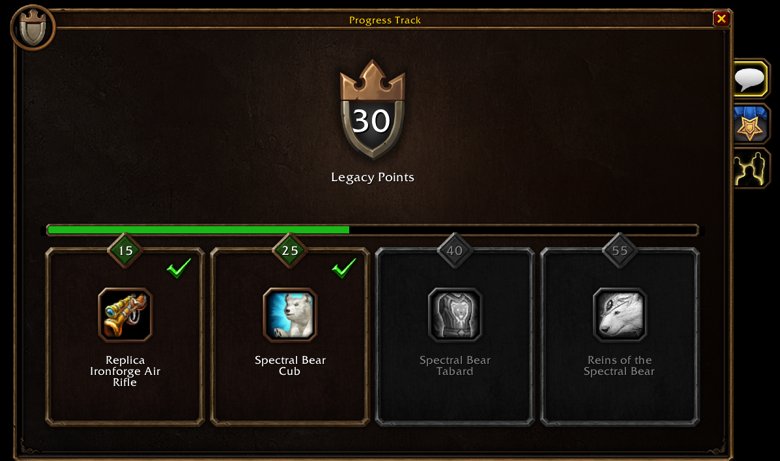 Perhaps the most interesting long-term addition is Forever’s Legacy System. Blizzard describes it as an account-wide horizontal progression system built around challenges, perks and rewards. Players earn Legacy Points through activities such as leveling, exploring and developing professions, then spend them on account-wide benefits. The system is intended to encourage engagement with different aspects of the game without requiring everyone to play multiple characters. This is an important distinction from ordinary vertical progression. Traditional character progression is primarily local. A character acquires levels, equipment, abilities and achievements. When the player creates an alternate character, much of that work begins again. Account-wide progression changes the relationship between those characters. Activities completed on one character can contribute to a broader record of accomplishment, and rewards can make subsequent adventures more convenient or rewarding. The beta retrospective highlights examples, reported by the creator from the beta and subject to change, involving resource gathering, fishing, cooking, rested experience, reputation and ability-related quality-of-life improvements. The strongest aspect of this design is that it recognizes a reality of MMORPG play: many players enjoy the game through multiple characters and activities rather than a single linear progression path. A player who levels a hunter, develops a profession and explores several zones has contributed time to the account even if that player later decides to focus on a paladin or druid. The Legacy System offers a way to acknowledge that broader engagement. Horizontal progression and the problem of power creep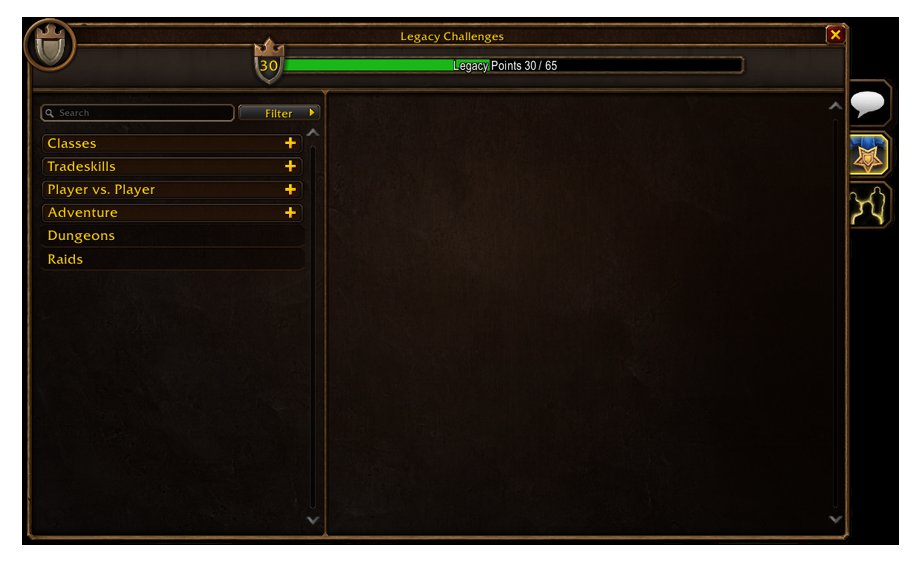 Account-wide rewards also introduce a risk. A system designed to reward exploration can gradually become a mandatory source of power if its benefits are too substantial. Players who prefer a single character may feel compelled to complete unrelated activities simply to remain competitive. New players may find themselves behind veterans for reasons unrelated to their understanding of their chosen class. Quality-of-life rewards can also change the pace and economic assumptions of the original game. Additional resources, longer buffs, improved regeneration or reduced reagent costs may seem modest individually but have broader effects when accumulated. The question is not whether account-wide progression is inherently good or bad. It is whether the rewards encourage breadth without turning breadth into an obligation. Blizzard’s stated intention that the system can be advanced through a range of activities is promising. Its actual success will depend on the relative power of the perks, the effort required to obtain them and their effect on players who do not pursue every available challenge. The best version of Legacy would make additional play feel worthwhile without making a player’s preferred way of playing feel incomplete. 8. The Long-Term Challenge: A Level-60 World That Keeps Growing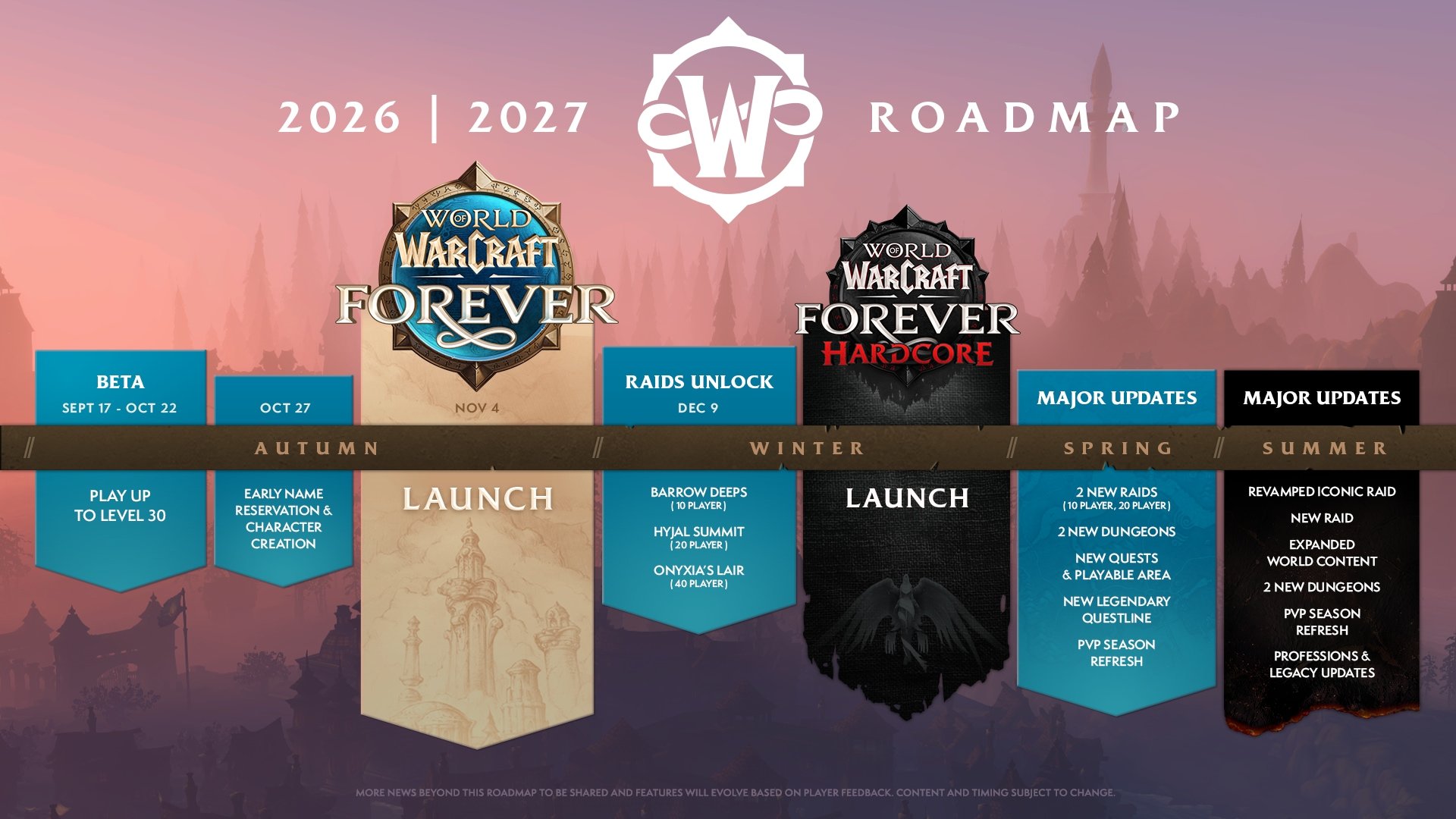 Blizzard has outlined an initial launch on November 4, followed by three raids unlocking on December 9 (the 10-player Barrow Deeps, the 20-player Hyjal Summit and the 40-player Onyxia’s Lair), Hardcore realms planned for some time after launch, and further raids, dungeons, quests, world content and PvP updates during 2027. Dates and scope remain subject to official updates. Blizzard has not named the “revamped iconic raid” on the summer 2027 roadmap; Force Gaming mentions Molten Core only as a community rumor, and it is unconfirmed. A permanent level-60 world creates an interesting design constraint. If the level cap remains fixed, developers cannot rely indefinitely on raising the maximum level to provide the primary measure of advancement. New content must coexist with existing progression rather than simply replacing it. That is potentially an advantage. Players can continue to inhabit the same foundational world, maintain familiar characters and return to earlier activities without every major update making previous accomplishments irrelevant. It is also a difficult balancing problem. What happens when the game has accumulated years of raids?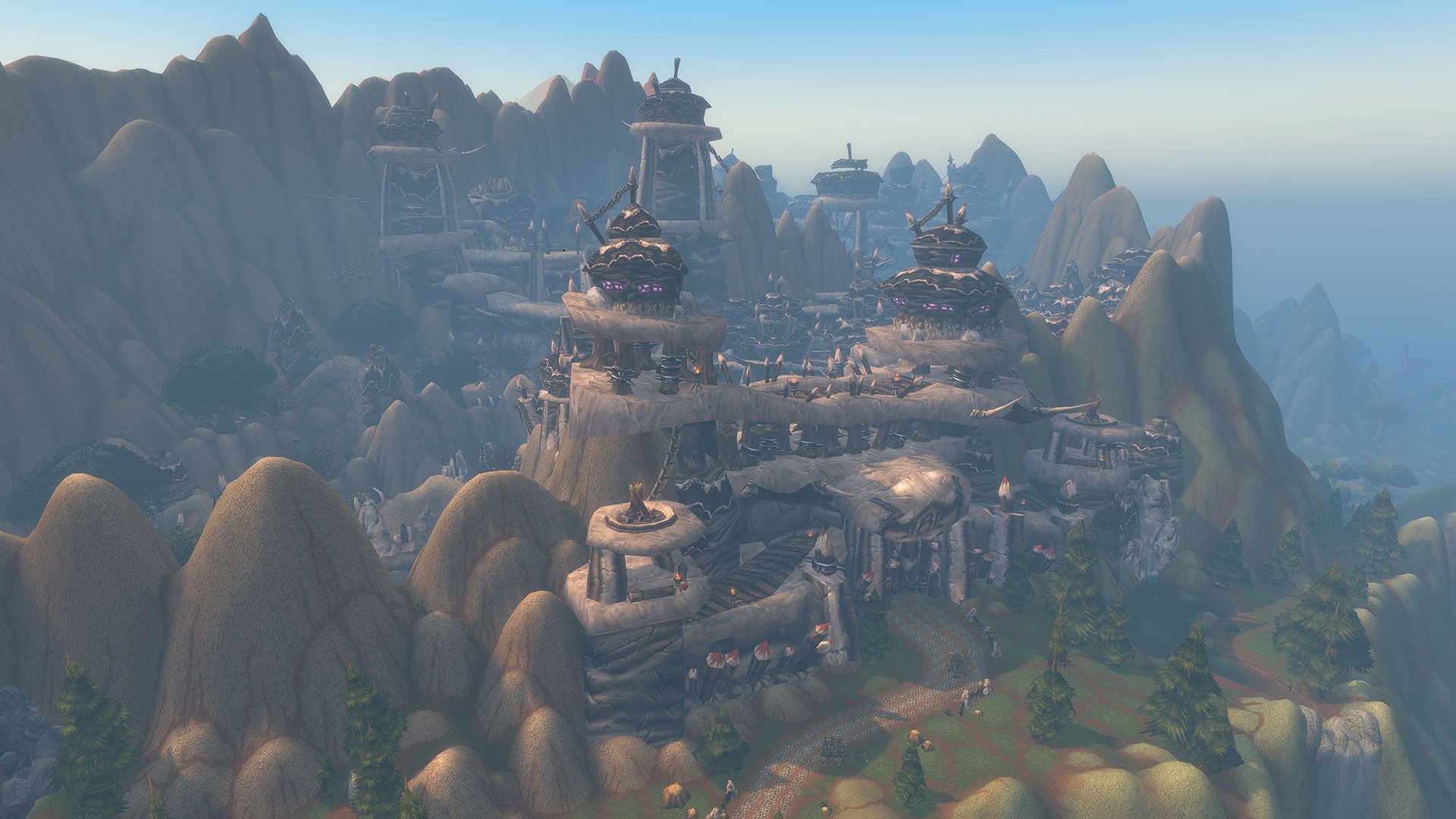 The beta retrospective raises a legitimate concern about equipment progression over multiple raid tiers. New raids need to offer compelling rewards. If their equipment is not meaningfully attractive, players may have little reason to participate. But if every new tier produces a dramatic increase in power, earlier content and equipment may become obsolete at an accelerating rate. Eventually, a fixed-level game can begin to resemble a conventional vertical-progression treadmill even if the level cap never changes. The challenge is to provide advancement while preserving the usefulness of the existing world. Potential approaches include carefully controlled item-level progression, sidegrades that offer different advantages, specialized equipment for particular encounters and horizontal rewards that broaden player options without making older content irrelevant. These are design possibilities, not confirmed descriptions of Blizzard’s future plans. What matters is that the problem must be addressed early. A progression model that works for the first two raid tiers may not remain healthy after several years of accumulated equipment, systems and rewards. Content cadence is not the same as sustainabilityA roadmap can establish expectations, but a schedule of new releases is not itself evidence of long-term health. The quality of those updates matters. So does their effect on the population. New content should create reasons to return without fragmenting the player base into isolated groups, invalidating established activities or making the game feel like a sequence of deadlines. A permanent world needs a recognizable rhythm: periods of discovery, progression, consolidation and renewed activity. If every update demands that players abandon the previous pursuit for a new one, Forever could recreate the fatigue it is attempting to avoid. The long-term objective should be a game that continues to offer meaningful choices, not simply a game that continues to add things. 9. The Three Risks That Deserve the Most AttentionThe beta retrospective identifies three particularly important concerns: leveling pace, character power and layering. Each relates to the same underlying problem. Forever must modernize the experience without removing the constraints that give it meaning. Leveling paceAdditional quests and dungeons can make the journey more varied, but they can also accelerate progression. If players gain levels too quickly, they may outgrow zones before experiencing much of their content. If dungeon quests provide disproportionately large experience rewards, they can encourage players to skip substantial portions of the world. The retrospective reports, though we have not confirmed it in official patch notes, that Blizzard adjusted dungeon experience and associated quest rewards during the beta after some combinations made it possible to bypass significant sections of the leveling journey. That is an encouraging example of responsive tuning. It also illustrates the importance of looking at systems collectively rather than evaluating each quest or dungeon in isolation. A new quest is not automatically beneficial if its reward structure encourages players to ignore everything around it. The correct target is not the slowest possible leveling process. It is a pace that allows players to experience the world without turning progression into an endurance test. Character powerImproved equipment and additional crafting opportunities can make leveling more rewarding. They can also compress the difficulty curve. If characters acquire too much powerful equipment too early, ordinary enemies and dungeons may cease to present meaningful challenges. If the developers compensate by making enemies substantially stronger, the result may undermine the original design in another direction. The beta retrospective suggests that Blizzard adjusted player abilities and gear rewards to make equipment more consequential, with additional tuning during testing. The critical test will come from the interaction between these systems at different levels and across different classes. A reward structure that works well for one specialization may create unintended advantages for another. This is an area where sustained observation matters more than initial impressions. Layering and the illusion of a shared worldLayering addresses a real operational problem: keeping a large population in a world that would otherwise become either overcrowded or deserted. But technical solutions have experiential consequences. When a player disappears during a transition between layers, or a PvP encounter becomes confusing because participants move between different population instances, the illusion of a continuous world weakens. The solution is not necessarily to eliminate layering. A sufficiently populated game may need population-management systems to remain accessible and playable. The challenge is to make those systems less visible and more predictable. If Blizzard can preserve population density while reducing disruptive transitions, Forever will have addressed one of the most difficult tensions in operating a persistent MMO: maintaining a world that feels shared at scale. 10. What Forever Can—and Cannot—Promise Returning PlayersForever will not be the right game for everyone. Players who dislike Classic’s slower combat, travel requirements, uneven class strengths or emphasis on long-term character development may find that the new version retains too much of what they disliked. The beta retrospective makes this point explicitly. Forever is not a wholesale transformation of Classic into modern WoW. Its appeal depends on preserving the original game’s structure while adding content and improving selected systems. That is both its strongest selling point and its natural limitation. For returning players, the proposition is more straightforward. Familiar territory offers a reason to return, while new quests, dungeons and class changes provide reasons to look again. For established Classic players, the more difficult question is whether Forever’s changes improve the experience without undermining the systems they already value. For new players, the question is whether the world can be welcoming without requiring them to master years of community knowledge, external guides and optimization culture before they can enjoy it. The answer will depend on more than the content available at launch. It will depend on the social environment, the accessibility of information, the fairness of progression and the willingness of the developers to respond when the community identifies problems. There is also a distinction between a game that is enjoyable during a beta and one that remains compelling after its systems have been mapped, its quests documented and its optimal strategies established. Novelty can produce temporary enthusiasm. Sustainable design must provide reasons to keep playing after novelty fades. Forever’s continued development gives Blizzard an opportunity to address that challenge, but the promise of future updates is not a substitute for delivering them well. 11. The RUIN Perspective: Belonging Is Built Through Shared WorkFor a community such as RUIN Gaming, Forever raises a question that extends beyond the quality of its questing and combat systems. What makes an MMORPG a place where a group of people can build something together over time? The answer is not simply the presence of guilds, raids or group-finder tools. It is the relationship between individual progression and shared activity. A player develops a character, learns a profession, discovers a useful route or acquires knowledge that can help someone else. A group organizes an expedition. A guild develops traditions and a recognizable identity. Encounters produce stories that remain meaningful after the rewards have been collected. These activities connect the game to the people playing it. Forever’s emphasis on class identity, profession utility, account-wide achievements and continued exploration could support that kind of community if the systems reward participation without demanding uniformity. A useful guild environment does not require every member to pursue the same specialization, use the same build or play at the same pace. It requires enough shared purpose that different contributions can fit together. That is why class diversity and social systems are related. A game with distinct roles gives players reasons to seek one another out. A world with useful professions gives non-raiding activities a place in the larger economy. A persistent progression system can encourage members to continue developing characters without forcing everyone into a single endgame routine. For RUIN, the opportunity is to treat Forever as a shared environment rather than merely another title on a game roster: a place for organized leveling, profession exchanges, dungeon groups, PvP, guides, discussion and long-term guild development. That does not mean every system will work as intended or that community-building can be delegated to the game itself. Guilds still need leadership, clear expectations, accessible information and a willingness to accommodate different levels of commitment. But a game that creates opportunities for meaningful cooperation provides a better foundation for that work than one in which nearly every activity is designed to be completed alone. Conclusion: The Promise Is Not More Classic. It Is a Living Classic.The most compelling argument for World of Warcraft: Forever is not that it has more quests than the original game, better lighting than the original client or more viable talent builds than the original class design. It is that these changes may reinforce one another. Expanded zones give players reasons to explore. Improved atmosphere makes those spaces more memorable. More viable specializations give players additional ways to contribute. Better crafting creates new relationships between gathering, production and equipment. Account-wide progression rewards broader engagement. Social systems help players recognize the people they encounter. Continued development offers the possibility of keeping the world relevant without abandoning its original geography. Together, these changes suggest a coherent design ambition: preserve the structure that made Classic distinctive while addressing the limitations that became more apparent as the game aged. The risks are equally clear. Leveling can become too fast. Gear can distort progression. Layering can weaken the feeling of a shared world. Class balance can converge on a narrow set of optimal choices. A long-term raid roadmap can gradually turn horizontal progression into another treadmill. None of these concerns invalidates the project. They are the problems that will determine whether its ambitions survive contact with a live game and a highly experienced player base. The beta retrospective from Force Gaming is an encouraging account of the experience available during testing. It is not, on its own, proof of long-term success. That judgment must wait for launch, broader participation and the evidence accumulated over months of actual play. World of Warcraft: Forever launches on November 4, 2026, with further content planned beyond release. The immediate test will be whether the full game delivers a satisfying journey from level 1 to 60. The larger test will be whether it can sustain that journey without making its own history obsolete. Classic WoW demonstrated that a world can become more than a progression system. It can become a shared point of reference: a place where geography, danger, class identity and cooperation create experiences that players remember long after an individual character has reached the level cap. Forever has an opportunity to build on that foundation. The measure of success will not be how quickly players exhaust its new content. It will be whether Azeroth remains a world they want to return to—and whether the people they meet there give them another reason to stay. Sources
Join the DiscussionAre you returning to Azeroth for Forever, or does Classic’s original design still leave too many rough edges? Which matters most to you: exploration, class identity, social play, PvP or long-term progression? Join RUIN Gaming to discuss the launch, organize with fellow players and help build a community around the next chapter of Azeroth. Join us on Discord at discord.gg/ruin and catch us live at twitch.tv/ruintv. RUIN Gaming — PvP is our business. Community is our foundation. RUIN Gaming is a fan community. This article is independent fan commentary and is not affiliated with, endorsed or sponsored by Blizzard Entertainment. World of Warcraft and World of Warcraft: Forever are trademarks of Blizzard Entertainment, Inc. Beta impressions are attributed to Force Gaming, and roadmap items are subject to change. |