Squadron 42 | Official Wishlist Trailer | The OathEnlist as a rookie in the UEE Navy and step into a cinematic, single-player space adventure where you are the center of the action. You don’t watch the rise of a hero, you become one.
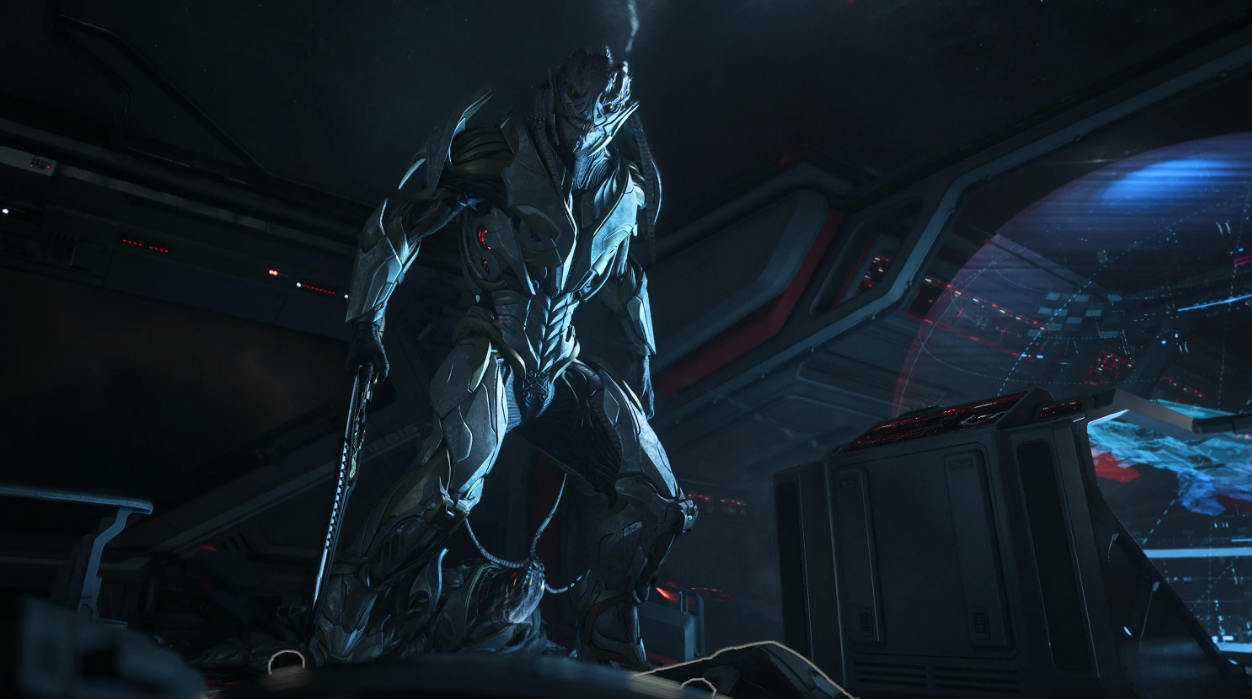
The landscape of single-player space combat games will reach new heights of cinematic fidelity with Cloud Imperium Games’ ambitious and highly anticipated title, Squadron 42 [CIG]. What began in 2012 as a modest Kickstarter stretch-goal tutorial meant to accompany the sprawling multiplayer sandbox of Star Citizen has dramatically transformed over a fourteen-year development cycle. Today, it stands as a massive, standalone, 40-plus hour military sci-fi RPG epic designed to serve as the definitive spiritual successor to the iconic Wing Commander series. Following major content-complete internal milestones and exclusive hands-on preview events for the media and long-time backers, the project has entered a crucial new phase. The game is officially targeting a Q2 2027 release window, a timeline underscored by its landmark debut on the official Steam Wishlist Page—marking the first time this massive single-player project can be tracked and acquired outside of CIG’s independent, crowdfunding ecosystem. Unlike the open-ended, emergent sandbox of Star Citizen’s Persistent Universe, Squadron 42 provides players with a highly structured, cinematic, narrative-driven campaign. Players step directly into the flight suit of a rookie United Empire of Earth Navy pilot assigned to the UEES Stanton, a massive Idris-class frigate patrolling the stars. The unfolding storyline strikes a delicate balance between a deeply personal character arc and a grand-scale military conflict, focusing on humanity’s desperate defense against the relentless, brutal threat of an alien species known as the Vanduul. To bring this epic narrative to life, the developers have bypassed traditional, text-heavy dialogue trees in favour of an incredible Hollywood cast. Industry icons including Mark Hamill, Gary Oldman, Gillian Anderson, Henry Cavill, Ben Mendelsohn, and John Rhys-Davies have lent their likenesses and voices through full performance capture. Rather than isolating these elite performances within traditional, detached cinematic cutscenes, their interactions are woven dynamically into the live gameplay fabric, demanding the player’s immediate attention and presence during high-stakes military briefings. The true mechanical signature of this title is its ambitious, seamless gameplay loop, which completely eliminates traditional loading screens. A standard mission sequence requires the player to wake up in their assigned bunk on the frigate, physically navigate a fully populated, living capital ship to attend an interactive mission briefing, walk into the busy flight deck, climb into their fighter’s cockpit, and launch into the void of space. From there, the player can seamlessly transition from high-velocity dogfighting to entering a planet’s atmosphere, landing on a hostile surface, and immediate participation in tactical first-person combat before flying back to the carrier. This seamless flow is supported by an accessible flight and quantum travel overhaul tailored specifically for single-player pacing. The inclusion of Quantum Boost permits localized high-speed travel at a staggering 5,400 meters per second, giving pilots the agency to actively steer around dangerous celestial anomalies, massive asteroid fields, and dynamic spatial hazards in real time. Beyond pure piloting, the campaign expands into ground operations, stealth infiltrations, and zero-gravity exploration using a sophisticated physics system. Players are equipped with an advanced military multi-tool that introduces rope mechanics, dynamic physics puzzles, and manual gravity manipulation. These tools become essential when navigating the fractured corridors of derelict alien capital ships, where shifting gravity grids and floating environmental debris turn simple traversal into a tactical puzzle. Cloud Imperium Games has leveraged its extended development cycle to engineer true, cutting-edge engine capabilities that set Squadron 42 apart from contemporary industry releases. Foremost among these technological feats is the Maelstrom Destruction Physics engine component. This proprietary system enables incredibly granular, physically based structural destruction across all items in the game world. Rather than utilizing pre-baked shattering animations, materials deform, bend, and tear completely organically based on the kinetic force and angle of an impact. Armor panels can be shot off a ship or a vehicle piece-by-piece, concrete pillars crumble progressively under heavy gunfire, environmental visors can shatter, and enemies will dynamically shoot through weakened cover as it degrades. This absolute physics fidelity is perfectly paired with an In-Engine Cinematic Seamlessness that bridges the gap between passive storytelling and active play. Utilizing dynamic, virtual camera tracks, the game engine shifts smoothly from an anamorphic cinematic lens profile during a dramatic story beat down into the player’s first-person helmet view without a single cut or hitch. Beneath the surface of these visual marvels lies the Advanced AI Mastergraph Architecture. Rather than relying on rigid, predictable script-trigger loops, every non-player character navigates a dynamic behavior matrix governed by hundreds of unique trait combinations. A wingman designated with a “Speedfreak” profile will over-rely on structural thruster boosts during a dogfight, while ground combatants will dynamically coordinate flanking maneuvers, suppress the player’s last known location, and adapt their combat spacing to counteract defensive player tactics. An objective assessment of preview builds reveals a striking list of competitive advantages alongside significant technical and structural hurdles. On the positive side, the game delivers an unmatched level of visual fidelity. Running natively at a crisp 4K resolution, the Star Engine showcases breathtaking character rendering, realistic global illumination ray-tracing, and highly atmospheric volumetric lighting. This visual power drives deep spatial immersion, allowing the player to live out the meticulous daily routine of a military crew member while the persistent “Galactipedia” database automatically logs, maps, and reads aloud audio briefings regarding scanned alien technology, weapons, or local planetary fauna. The heavy atmospheric presence is anchored by an outstanding audio profile and a massive, sweeping orchestral score composed by industry veteran Geoff Zanelli. Most importantly, the game offers complete standalone accessibility, ensuring that traditional single-player enthusiasts can enjoy a complete space opera experience without any prior knowledge or financial investment in Star Citizen’s complex MMO ecosystem. Conversely, the sheer scale of the project introduces a heavy system burden that will challenge consumer hardware. The game demands a minimum of 150 GB of high-speed solid-state storage space alongside strict Windows 11 compliance. Pushing standard 4K performance at native, unassisted frame rates heavily tests the boundaries of current graphics architecture, making upscaling technologies a near-mandatory requirement for mid-range systems. From a gameplay standpoint, early hands-on impressions have noted structural pacing flaws, particularly during prolonged, rail-bound turret-gunner segments that can disrupt the game’s otherwise fluid momentum. Additionally, while the alien Vanduul are incredibly lethal when operating in coordinated squads, individual foot soldiers can occasionally exhibit sluggish reaction times when caught in open environments. Finally, long-term followers must contend with the reality of a compressed narrative scope. While early documentation pointed toward an episodic trilogy release structure, recent configurations confirm that CIG has condensed the story into a singular, cohesive 40-hour block—meaning fans expecting a continuous episodic release cadence will find the ultimate narrative structure significantly altered. Critiquing Squadron 42 requires a careful examination of its controversial “14-Year Polish” phase. Having weathered intense public scrutiny regarding severe feature creep and perennial delays fueled by over half a billion dollars in crowdfunding milestones, the project has often been cited as a cautionary tale of unchecked game production. Skeptics argue that pushing the official launch window deep into 2027 is a calculated business move designed to maximize market breathing room and avoid a devastating logistical clash with industry juggernauts like Grand Theft Auto VI. Furthermore, there is a valid critical concern that a gameplay loop reworked so many times across a decade risks feeling mechanically dense, bloated, or overly burdened by its own simulation systems. However, the definitive consensus emerging from recent private previews and the formal transition to mainstream storefronts points to a paradigm shift. The core production tools are finally stable, and the project has evolved past a disconnected gallery of impressive technical demos. It is now a unified, playable piece of interactive media that holds the genuine potential to revitalize the forgotten era of the big-budget, cinematic space opera. |